Seattle Center Monorail Updates ORCA Transfer Policy
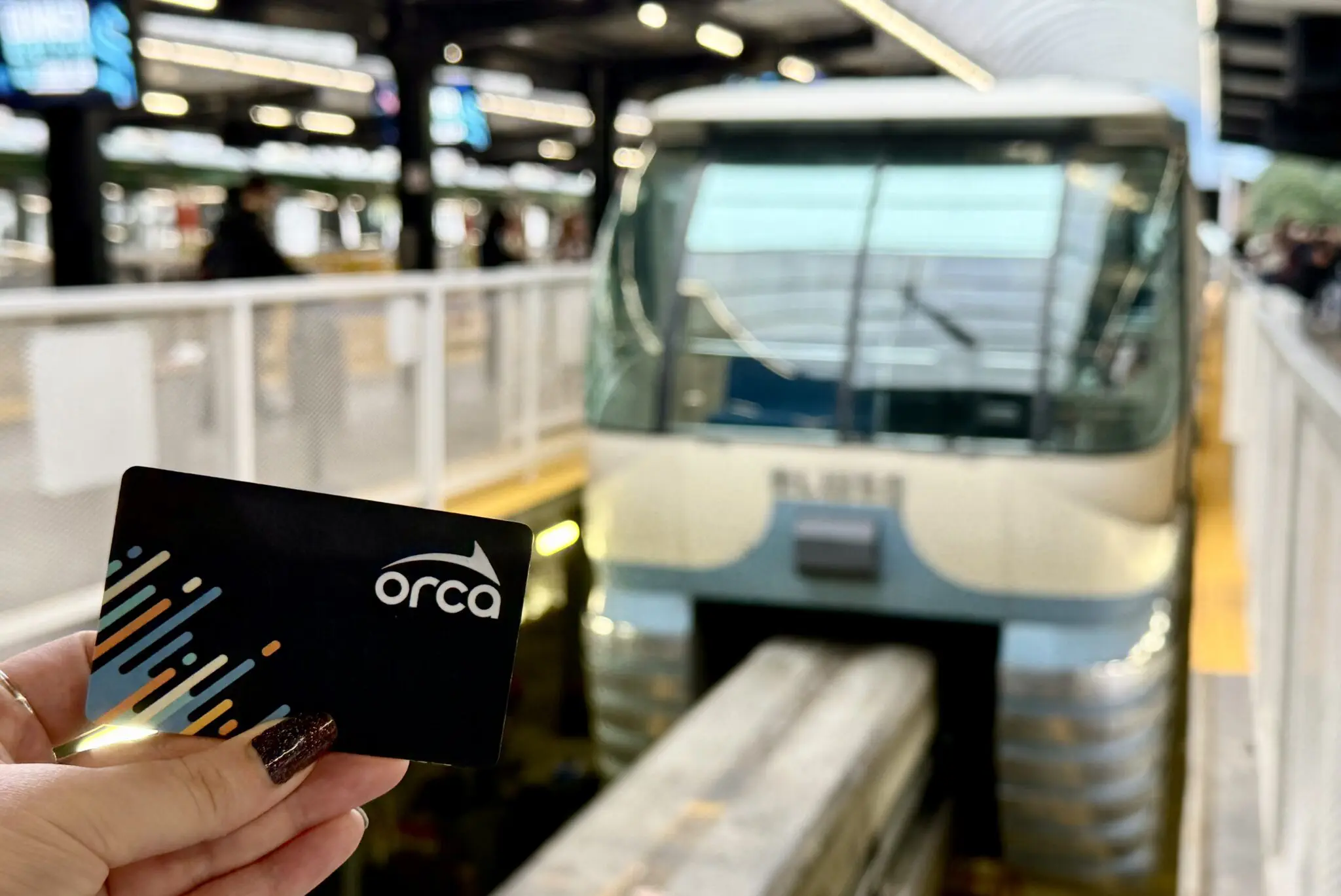
Beginning on January 1, 2026, the ORCA Transfer Policy for Seattle Center Monorail boardings is changing. Riders will still be able to tap ORCA cards to ride the Monorail and there are no changes for passengers using a Monthly PugetPass or Regional Day Pass. Passengers paying fares with ORCA E-purse or an employer-provided Business Passport will no longer receive a free transfer. This change is projected to impact less than 18% of all monorail boardings.
This transfer policy change ensures financial sustainability for the historic system. The Monorail receives no taxpayer funding to cover its operating costs; unlike most transit systems, it relies solely on fares. This update puts the Monorail’s ORCA participation on sustainable footing and aligns its transfer policy with Washington State Ferries and Kitsap Fast Ferries – two other agencies that depend heavily on fare revenues to meet operating costs.
Built for the 1962 Seattle World’s Fair, the historic system carries 2.2 million passengers annually. The Monorail offers reduced fares for people with disabilities, people with lower incomes, U.S. military personnel, and seniors. Youth with a valid ORCA card can ride free. Riders with a ticketed event at Climate Pledge Arena (CPA) receive a free monorail ticket through the Kraken + CPA App.
Changes for riders (effective January 1, 2026):
- E-purse: Riders who use ORCA E-purse and transfer from another ORCA agency will be charged the full Monorail fare for every ride. Using E-purse means paying with pre-loaded money for each trip. This change impacts all riders using E-purse, no matter what fare you pay.
- Business Passport Products: Riders who receive Passport products will see no change, but the organization who provides the product will see a cost increase for Monorail boardings.
- PugetPass: Riders who use ORCA Monthly PugetPass and Regional Day Pass will see no change.
Monorail ORCA Transfer Policy (effective January 1, 2026): 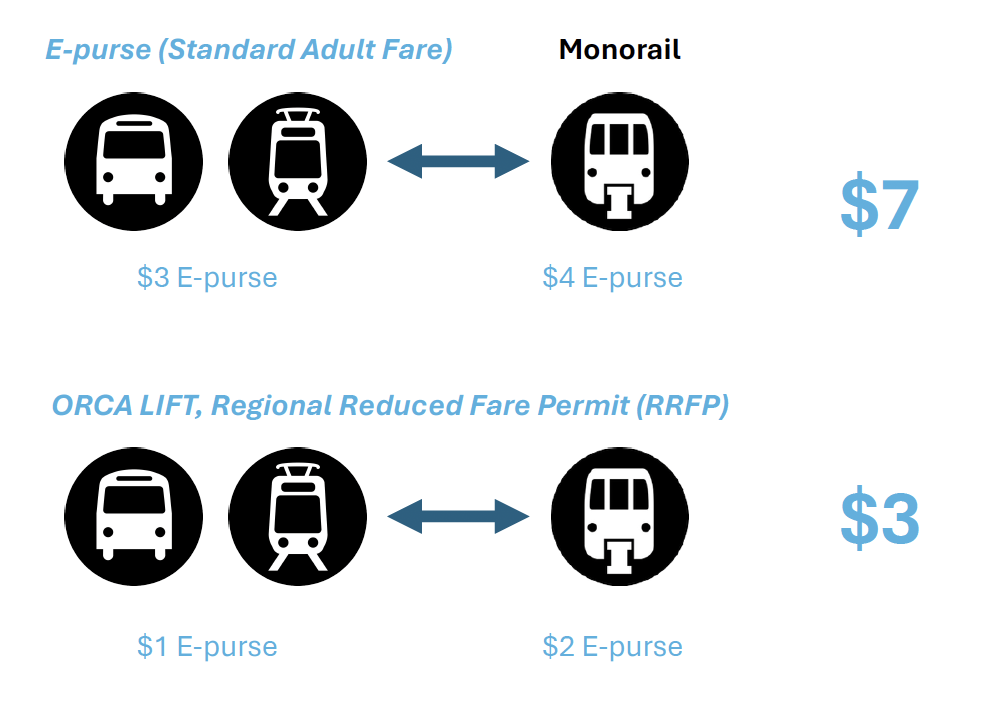
PugetPass Monorail ORCA Transfer Policy (no changes, remains the same):
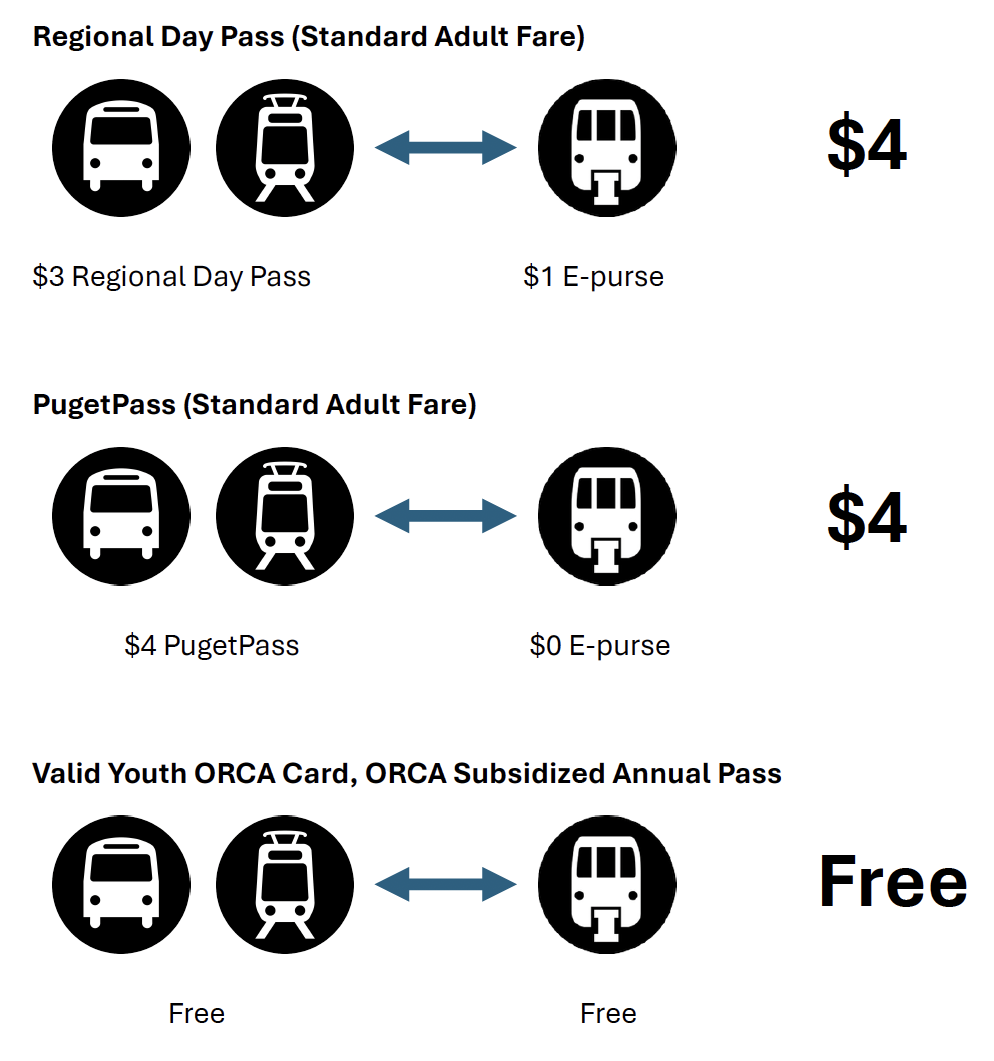
This transfer policy change impacts passengers paying adult and reduced fares. Reduced fare riders pay 50% of the full Monorail fare. The Monorail will continue to accept ORCA LIFT and ORCA Subsidized Annual Passes, which provide discounted fares for eligible riders. Together, ORCA LIFT and ORCA Subsidized Annual Passes serve more than 110,000 active cardholders. U.S. servicemembers and veterans are also eligible for a reduced fare on the Monorail. Youth age 18 and younger can ride free with a valid Youth ORCA card. Learn more about ORCA transit fare options at https://info.myorca.com/using-orca/ways-to-save/
For questions, please contact Valancy Blackwell: Valancy.Blackwell@seattle.gov.
About Seattle Center Monorail:
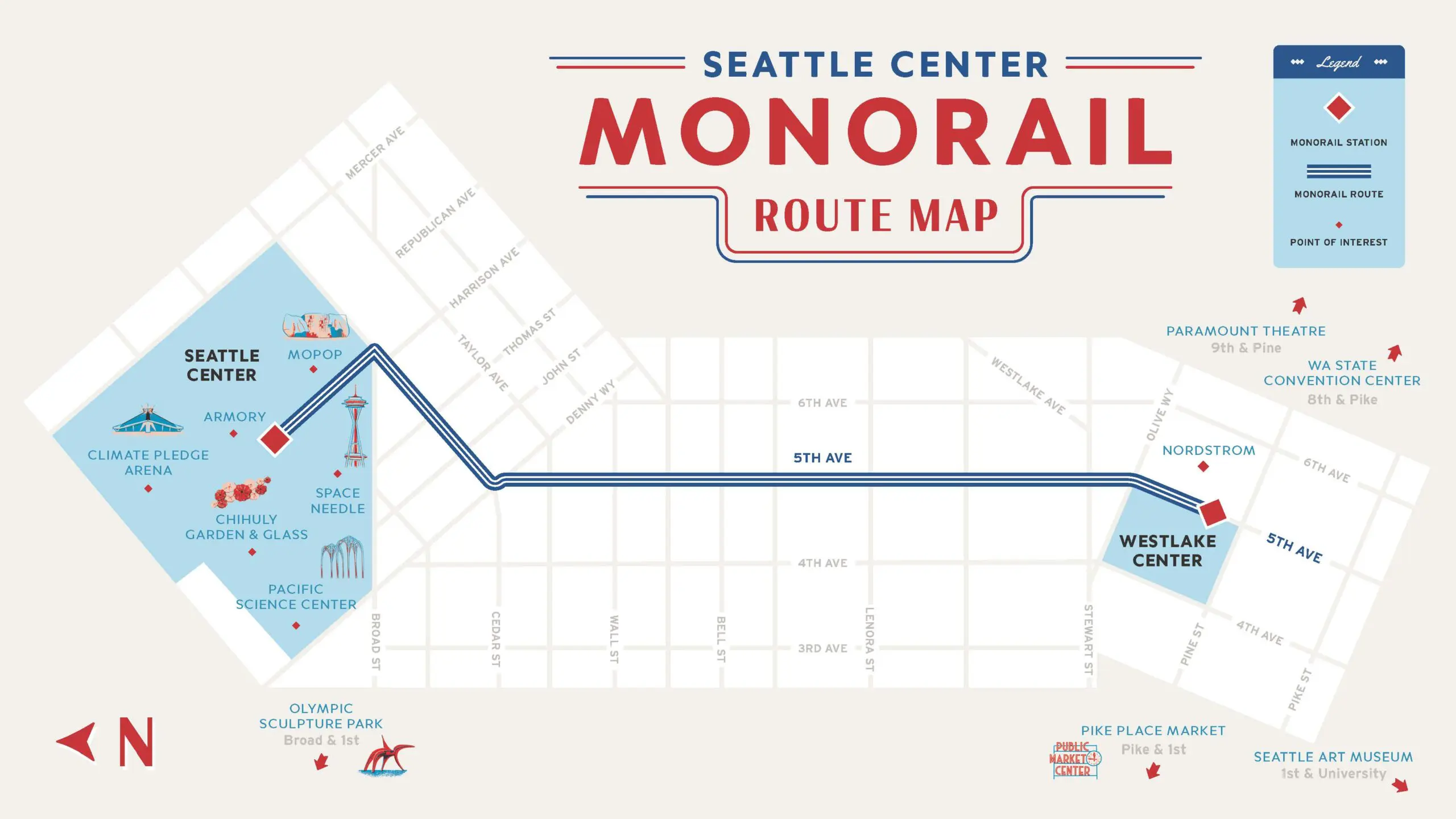
Built for the 1962 Seattle World’s Fair, the Seattle Center Monorail is owned by the City of Seattle and overseen by Seattle Center. The historic system provides an important last-mile connection between downtown’s Westlake Center and Seattle Center. Since 1994, it has been privately operated through a Concession Agreement with Seattle Monorail Services. Seattle Center Monorail joined the regional ORCA system in October 2019 under an affiliate agreement with King County Metro.
About Seattle Center:
Seattle Center is a 74-acre civic, arts, and cultural gathering place in the heart of the city. It is home to more than 30 partner organizations—including Climate Pledge Arena, KEXP, MOPOP, Pacific Northwest Ballet, Seattle Opera, Pacific Science Center, SIFF, and many others—alongside world-class attractions, historic venues, public art, and a dynamic calendar of free and affordable events for all ages, centered around the iconic International Fountain.
As a department of the City of Seattle and anchor of the Uptown Arts & Cultural District, Seattle Center serves as a hub for creative expression, cultural diversity, and civic life. It also manages the City’s new Waterfront Park in partnership with Friends of Waterfront Seattle, delivering cultural programming, operations, and civic care on Seattle’s revitalized downtown waterfront.
In 2025, Seattle Center is projected to generate over $900 million in visitor spending, contribute more than $2 billion in total regional economic impact, and support more than 18,600 jobs. With the support of our Official Partners — Alaska Airlines, The Climate Pledge, Coors Light, Pepsi, Symetra, T-Mobile, and WaFd Bank — Seattle Center is the #1 most-visited arts and cultural destination in the Pacific Northwest.
Seattle Center also oversees the City-owned Seattle Center Monorail, which is managed in partnership with Seattle Monorail Services, the system’s long-time concessionaire.
About King County Metro:
King County Metro has the most riders of any transit agency in the northwestern United States. Metro provides bus, on-demand, paratransit, vanpool and water taxi services, and operates the Seattle Streetcar, Sound Transit Link light rail and Sound Transit Express buses.